How we built AI visibility -step by step
What got us to AI: the solid foundations
To understand how we built a strong presence across many AI prompts, it helps to know the basics of our marketing. Our SEO AI case study is the story of consistent, carefully executed activities at scale -from SEO, through content, to brand building.
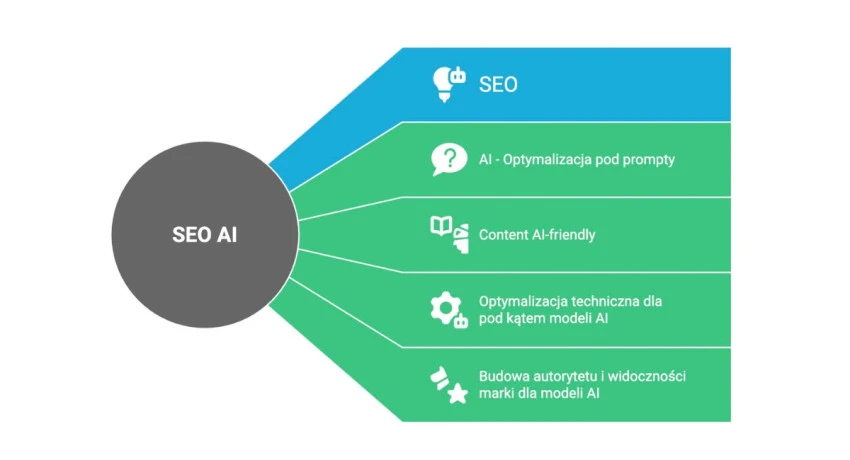
Stage 1. SEO in Google
widoczni built its growth on SEO from day one -first for clients, in parallel for its own site. The entire marketing team, supported by an SEO specialist, was responsible for widoczni.com's visibility.
The site went through full technical SEO optimization. We continuously expanded content on service pages, keyword-focused subpages, and brand sections including the blog and About Us. In parallel, we built a strong backlink profile through expert publications on recognized industry portals.
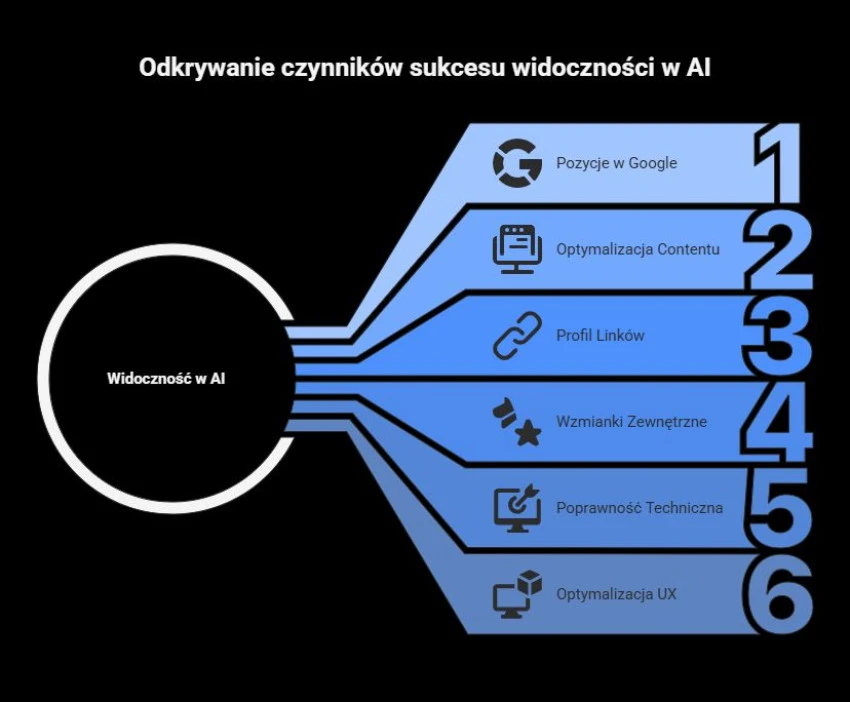
What drove AI visibility:
- top Google rankings for the most important industry keywords
- extensive, optimized content on the website
- a strong backlink profile and mentions on external sites
- technical correctness and UX optimization
Stage 2. AI-friendly content
Expanding content on widoczni.com
The website was the most important channel we continuously developed. Every activity in other channels was tied back to the site -we drove traffic from social media and external publications, and the bulk of content work focused on the site itself.
This matters because AI models draw heavily from websites. We invested most of our effort in SEO and in creating and distributing expert content: guides, case studies, interviews, and educational materials. As a result, the site is now a comprehensive, coherent source of knowledge about widoczni -not just for clients, but for AI too.
Client case studies
In parallel, we built an extensive library of client collaboration stories. We documented dozens of SEO and Ads projects with specific results, industry context, and business scale. We also produced client interviews in which they evaluate the outcomes of our work.
This type of content is particularly valuable for AI: it connects measurable results with specific brands and industries, helping language models better understand what we actually specialize in and the kinds of projects we take on.
Rankings as an AI-friendly format
A key element of our AI-friendly content was our proprietary rankings. We started with a ranking of the largest SEO agencies by LinkedIn data, then expanded the format to cover other types of agencies and digital creators.
Published annually and distributed via the website, social media, and industry portals, these rankings serve two purposes: they're a useful resource for readers and a strong signal for AI that our brand operates at the center of the industry ecosystem. widoczni appears in many of these rankings, which further reinforces the brand's presence in AI responses.
How we built AI visibility:
- Creating and publishing annual agency rankings based on market data
- Including widoczni in those rankings
- Distributing rankings via the website, social media, and industry portals
Stage 3. Prompt-based optimization
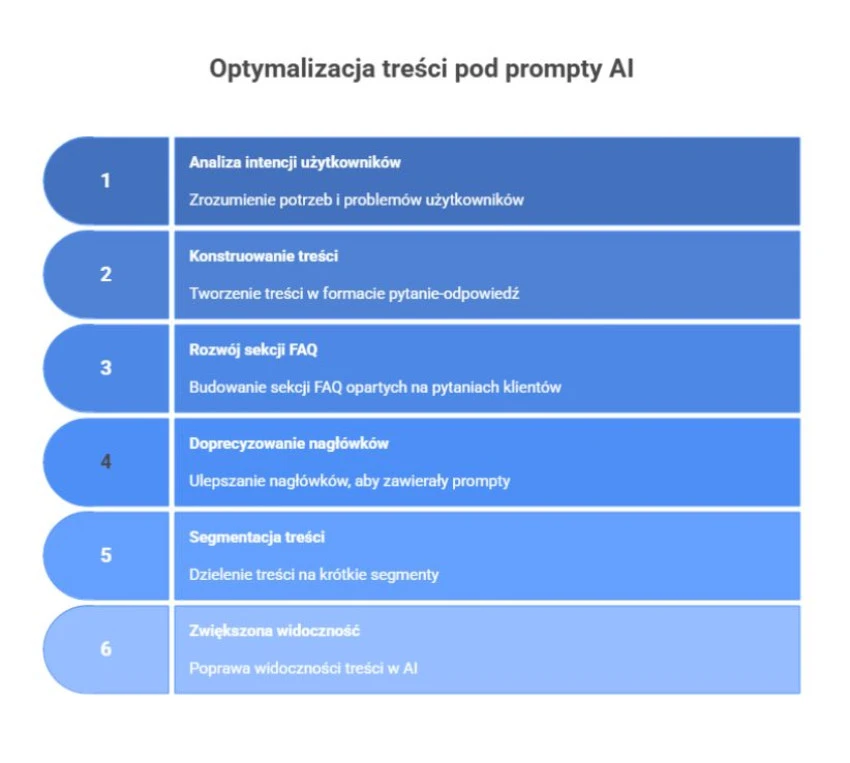
Building on existing content, we shifted focus from keywords to prompts -the actual questions users ask AI. We analyzed audience intent and built content structured around specific, complete questions with clear answers.
In practice, this meant expanding FAQ and Q&A sections based on real client questions, refining headings and introductions to include full prompt phrasings, and breaking longer content into short, standalone segments that AI can easily extract as a ready-made answer.
As a result, our content became better aligned with the conversational style of AI queries and more frequently selected as a citation source.
Stage 4. Building brand authority
Content, education, social media
Our strong AI position also comes from consistent brand recognition building. We never limited ourselves to lead generation -the primary goal was always a strong, expert brand. Alongside SEO, we ran content marketing (rankings, articles, ebooks, interviews), the widoczni Academy education project, industry events, and active social media marketing.
Regular conference presence, our own events, school lessons under the patronage of the Mayor of Poznań, and active presence on LinkedIn, Facebook, Instagram, TikTok, and YouTube built visibility across many channels. For AI, that's a strong signal that it's dealing with a real, active brand -not an anonymous website.
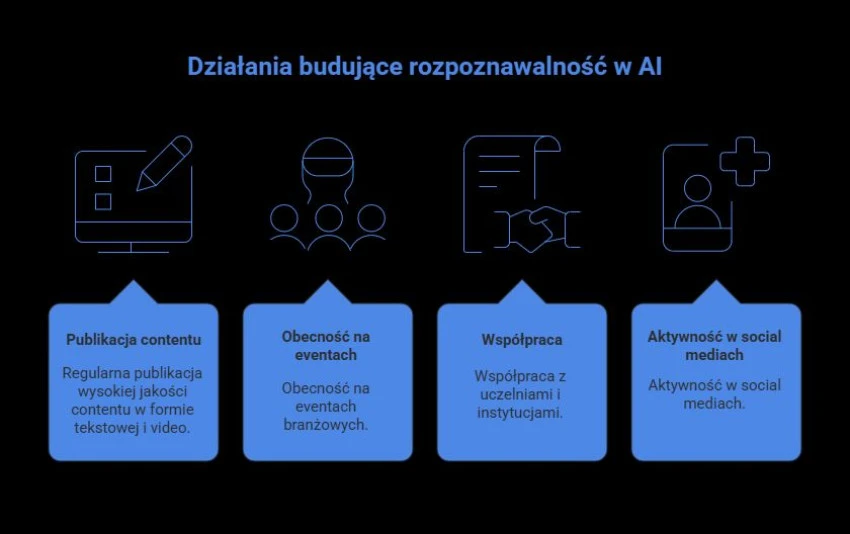
How we built AI recognition:
- Regular publication of high-quality content in text and video format
- Presence at industry events
- Partnerships with universities and institutions
- Active social media presence
Brand mentions
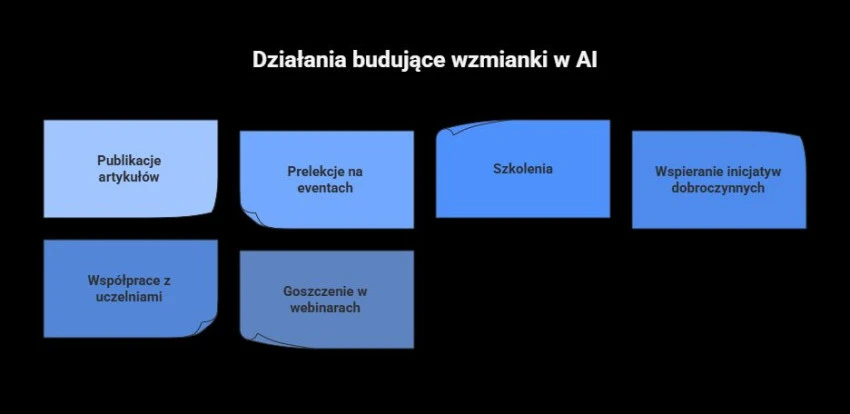
Over the years we accumulated a broad base of mentions: publications in industry magazines, conference talks, training sessions, charity support, university partnerships, webinar appearances. These activities generated event coverage, social shares, and news about our agency.
For AI, each mention is additional confirmation of brand activity and credibility. Models evaluate not just the website itself, but the entire context across the web -the volume and quality of mentions is one of the key signals in building an AI model's picture of a company.
Client reviews on Google and Clutch
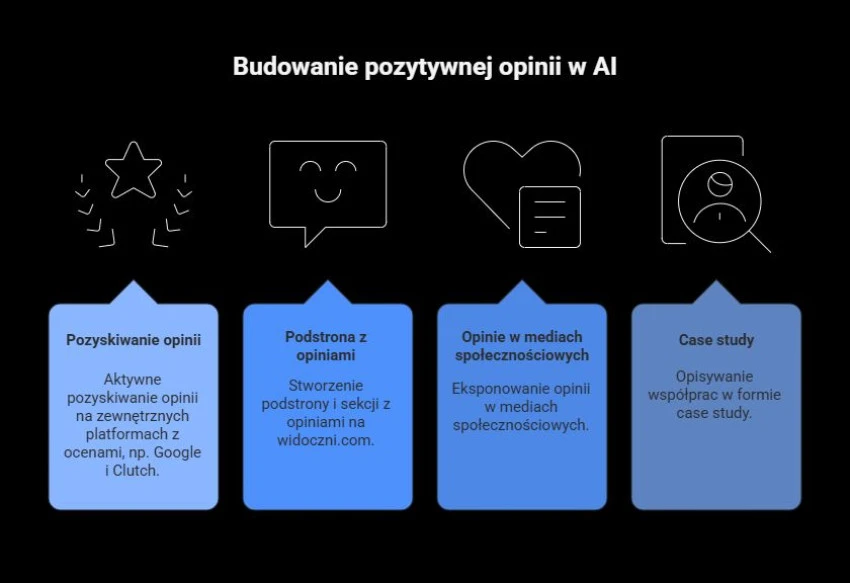
Client reviews have always been an important confirmation of our effectiveness. We invested in actively collecting positive reviews and showcasing them. Over the years we've become one of the most frequently and highly rated digital agencies in Poland. We focused on Google and Clutch, then featured reviews on our website, social media, and other online channels.
Review work isn't just about collecting them -it's about ongoing management. We respond to every review, and for negative ones we implement additional corrective action.
Stage 5. Technical and on-page optimization for AI
When the industry's first AI optimization recommendations appeared, most of our foundations were already in place thanks to years of SEO and content work. The next step was addressing technical considerations specific to language models.
What we implemented:
- Extended Schema.org structured data and other markup to help AI interpret content
- Refined content structure (clear headings, direct messaging, prompts in key locations)
- Expanded the site with information essential for AI to fully understand the agency
We also ensured consistency of widoczni's descriptions across all online channels: the website, directories, and external profiles. We expanded off-site activities (mentions, forums, publications with links or brand name). We also increased our focus on video, especially YouTube, which is one of the key knowledge sources for AI models.
How we measured SEO AI results
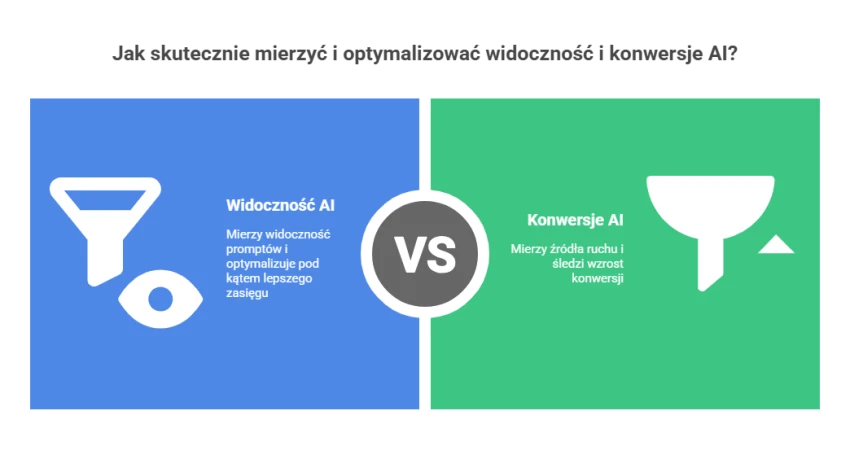
We track both visibility itself and conversions from AI-sourced traffic.
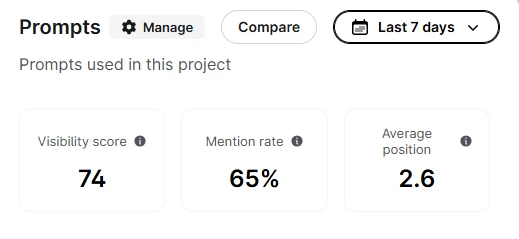
Measuring AI visibility.
We appear for the majority of prompts describing our business. We verify visibility using external tools. Prompts where we don't yet have visibility go into the ongoing optimization plan.
Measuring conversions from AI
We track traffic sources tied to conversions. Since we started measuring, we've seen steady growth in conversions from AI models.