How to advertise your business online?


• Where should you advertise your business?
• Which ad systems and platforms should you choose?
• Should you start your campaign with Google Ads (Search, Display, Performance Max)?
• Is Microsoft Ads (Bing) a good alternative with lower CPC and specific audiences?
• Are Facebook and Instagram Ads better for community engagement and remarketing?
• Will TikTok Ads work for a younger audience and short videos?
• What role does LinkedIn Ads play in B2B marketing despite high CPC?
• Is Amazon Ads worth using for e-commerce?
• Should you use native ads (Taboola, Outbrain) for content marketing?
• Which digital marketing activities and tactics are most effective?
• How to split your advertising budget?
• How to measure channel performance: conversions, CPA, ROAS?
• Summary
• FAQ - Questions and answers
Advertising your business online is essential to success. A well-run campaign can capture the attention of potential customers, build brand awareness, and drive sales growth. Whether you are just launching your brand or your company already holds an established position on the market, it pays to be visible online and to learn how to advertise your business. Find out where to start promoting your company and which ad systems work best in different situations. Discover the strategies that will grow your visibility online.
What you'll learn in this article:
- where to advertise your business online
- which ad systems and platforms to choose
- when to start with Google Ads and when with social media
- what roles Facebook, Instagram, TikTok, LinkedIn, and other social platforms play
- how to plan your budget and choose ad formats
Where should you advertise your business?
Where you advertise online depends mainly on your business goals and target audience. Every channel has its own character and delivers different results. To build brand visibility and reach customers effectively, it pays to be present in several places online. The most important and most common forms of online advertising include:
- Your own website – the foundation of all marketing activity and the central point of your company presence online. It is where campaign traffic is directed and where conversions happen.
- Content marketing – regularly publishing valuable content that builds trust, supports SEO, and increases visibility in search results.
- Local advertising – activity aimed at customers in a specific area, including local SEO and a Google Business Profile listing.
- SEO – long-term visibility building in search for a wide range of keywords that attract traffic with varied intent.
- Google Search ads – a fast way to reach users actively searching for products or services.
- Google Shopping product ads – ideal for e-commerce, showing your offer with price and photo right at the search stage.
- Google Display ads – banners and graphics across the display network that support brand recognition and remarketing.
- Google Ads remarketing – reminding people who already visited your site about your offer, which improves the chance of closing a sale.
- Video advertising – a dynamic, engaging format that works well for building awareness and presenting your brand.
- Google Ads smart campaigns – a solution that uses automation and Google algorithms to improve performance.
- Social media activity – running profiles that let you build a community and strengthen relationships with your audience.
- Paid social advertising – paid campaigns on Facebook, Instagram, TikTok, or LinkedIn that enable precise targeting and greater reach.
As you can see, there are many online advertising options, and each answers a different business need. By combining the forms above, you can build a coherent ecosystem that works both in the short and the long term.
Which ad systems and platforms should you choose?
The internet offers many ways to reach potential customers today. Ads can appear in search engines, on social media, on partner sites, or as video. It is worth looking at the ad systems of the biggest players on the market, such as Google Ads, Microsoft Ads, Meta Ads, TikTok Ads, and Amazon Ads, as well as remarketing. Each system works a little differently, so before you settle on one, get to know the available platforms, their capabilities, and their strengths. That makes it easier to match your strategy to your company goals and the budget you have.
Should you start your campaign with Google Ads (Search, Display, Performance Max)?
Google Ads is usually the first choice when starting online advertising. That is because people using Google Search actively look for products and services, which often signals purchase intent. Campaigns in this system let you reach people who are ready to decide and who often compare offers from different companies.
Search network advertising
This is the most classic ad format, shown directly in search results. Its biggest advantage is precision. The ad reaches users who type specific queries related to your offer, so your budget goes toward an audience with high conversion potential.
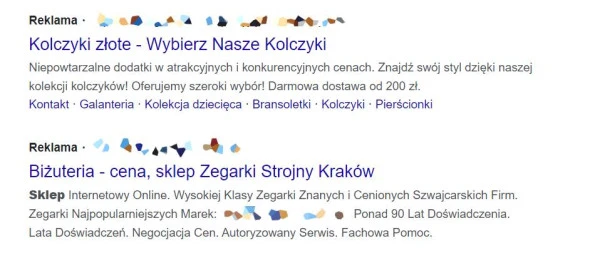
Search network advertising
Google Display network campaigns
Banners and graphics across Google partner network help increase brand recognition and reach a broad audience. Display is also an important part of remarketing, because it reminds people who visited your site but did not complete a purchase about your offer. This type of ad carries information about your company, services, or products and appears on Google partner sites and in apps. Users who click the ad anywhere are taken straight to your website.
Performance Max
This is the newest Google Ads campaign type, and it combines many formats in one. Using artificial intelligence, the ads can appear in Search, YouTube, Gmail, and the Display network. Performance Max works especially well for sales campaigns, because the algorithm learns which placements and formats deliver the best results.

Is Microsoft Ads (Bing) a good alternative with lower CPC and specific audiences?
Although most companies reach for Google Ads first, it is worth remembering that other search ad systems exist too. Microsoft Ads, meaning ads shown on Bing and its partner network (including Yahoo and AOL), can be an interesting alternative, especially where competition is lower.
The biggest advantage of Microsoft Ads is often the lower cost per click (CPC). With a limited budget, that means more site visits and more data to analyze performance. This option can be especially attractive in industries where keyword competition on Google Ads is very high and click costs keep rising. Bing also has a distinct audience. These are often people using the Edge browser, Windows, or Microsoft Office. In many cases they belong to the business segment, which makes Microsoft Ads a valuable addition to a marketing strategy in the B2B sector.
Microsoft Ads will not fully replace your Google campaigns, but it can be a good addition to your advertising. Lower click costs and a specific audience make it a channel worth considering, especially if your company operates in niche industries or you want cheaper sources of traffic.
Are Facebook and Instagram Ads better for community engagement and remarketing?
Facebook and Instagram are among the most popular social platforms. They offer the extensive Meta Ads system, whose greatest strength is precise targeting. You can target ads not only by age, gender, or location, but also by interests, behavior, and online activity. Meta Ads work very well for building relationships with your audience. With formats like carousels, short video, and stories, a brand can engage users and present its products or services in an appealing way. Social media is the ideal place to show your brand value and build customer loyalty.

Example of a Facebook ad
How does remarketing work in Meta Ads?
Remarketing in the Meta Ads ecosystem is one of the most effective sales tools. With the Meta pixel and product catalog integration, you can track user behavior on your site and in the app, then reach those users with tailored messages.
Examples of what remarketing on Facebook and Instagram can do:
- Site visitors – ads aimed at people who viewed your offer but took no action.
- Cart abandoners – one of the most effective scenarios. A user who added a product to the cart but did not buy can receive a reminder ad with extra incentive, such as a discount or free shipping.
- Customers who made a purchase – remarketing does not have to mean pushing the same product again. You can also use it for cross-selling and upselling, offering complementary products or newer versions.
- Users active on social media – Meta lets you build remarketing lists based on interactions on the platforms themselves, for example people who watched a video, clicked an ad, or liked a post.
This is why remarketing in Meta Ads works at different stages of the funnel. It can remind people about your offer, reinforce a buying decision, or encourage a repeat purchase. The key is matching the message to the moment. Remember that different content works for sales campaigns than for loyalty efforts.
Will TikTok Ads work for a younger audience and short videos?
TikTok has gained enormous popularity in recent years, especially among younger audiences. Short, dynamic videos grab attention and engage viewers much faster than traditional ad formats. TikTok Ads can therefore be a great choice for brands that want to reach Gen Z and younger Millennials. TikTok works not only for brand campaigns but increasingly for sales campaigns too. The platform is developing e-commerce tools such as a product catalog, cart integration, and dynamic remarketing ads. As a result, your brand can build awareness and generate sales at the same time.
Why does advertising on TikTok work?
TikTok Ads is an attractive option for companies that want to communicate in a modern, creative way and reach a younger audience. Its biggest advantages are:
- A user-native format – ads appear in the natural app feed and resemble regular content, which makes them less intrusive and more likely to be watched to the end.
- Short video forms – the platform promotes quick, creative messages that stick in memory. That is a chance for a viral effect and reaching a wide audience at relatively low cost.
- Advanced algorithms – TikTok effectively matches content to user interests, which increases the chance of high engagement and conversion.

A TikTok ad
What role does LinkedIn Ads play in B2B marketing despite high CPC?
LinkedIn is the world largest business platform, bringing together specialists, managers, and experts from many industries. LinkedIn Ads is one of the most important channels in B2B marketing, even though its cost per click (CPC) can be several times higher than in other ad systems. The high CPC is offset by targeting precision and the ability to reach people who actually make purchasing decisions, so LinkedIn Ads is best treated as an investment in quality leads and your company image in the professional market.
Why use LinkedIn Ads?
- Precise B2B targeting – the platform lets you target ads by job title, industry, company size, seniority, or skills. That means you can reach the people actually responsible for buying decisions.
- Building an expert image – content published and promoted on LinkedIn is professional in nature. This lets a brand strengthen its authority and position itself as an industry leader.
- Lead generation – LinkedIn offers dedicated ad formats, such as Lead Gen Forms, that let you collect contact details directly in the app, which shortens the lead acquisition process.
When does LinkedIn Ads make the most sense?
- for companies operating in a B2B model, especially in professional services, IT, technology, or consulting
- for employer branding campaigns meant to attract specialists and build an employer brand
- for long-term efforts aimed at building awareness and an expert position
LinkedIn Ads is not a mass channel and will not work in every industry, but in B2B marketing it can be an extremely important part of your strategy.
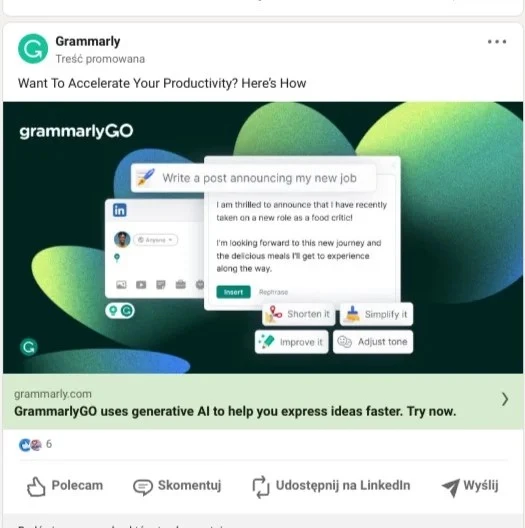
Example of a LinkedIn ad
Is Amazon Ads worth using for e-commerce?
Amazon Ads lets you promote products at the exact moment a user is searching for them. That is a huge advantage, because the ads appear next to competitors offers, on category pages, and in search results. For sellers, it means a chance to jump ahead of the organic results and gain visibility instantly.
When is Amazon Ads most valuable?
Amazon Ads works like a mix of an online store and a shopping search engine. It works best when:
- you run an e-commerce business and want to expand sales to the marketplace
- you sell products competing in popular categories
- you want to scale sales quickly and reach customers ready to buy
When might Amazon Ads not work?
This system will not always work for service businesses or brands without a product range. Treat it as a complementary channel, but if you run an e-commerce business it can be one of the pillars of your strategy. When your business relies on online sales, it is worth including Amazon in your ad plan, especially when your products face strong competition and need extra exposure. Remember that Amazon is one of the largest sales platforms in the world, and its importance keeps growing every year.
Should you use native ads (Taboola, Outbrain) for content marketing?
Native ads are a format that looks like a natural part of a web page. Instead of a classic banner, the user sees a thumbnail, a headline, and a short description. They most often appear in recommended-article blocks on news portals. Taboola and Outbrain work with large publishers and let you present sponsored content next to editorial material.
This kind of advertising supports content marketing very well. Instead of selling directly, it points readers to blog posts, guides, case studies, and reports. This helps a brand attract people who are only just beginning the buying process. The content builds trust, and it is the later touchpoints with the brand that lead to conversion.
What role do native ads play?
Native ads can play several roles:
- Growing content reach – you promote expert articles and guides and reach new audiences.
- Building brand awareness – exposure in the context of industry content feels natural and less intrusive.
- Supporting remarketing – a user acquired through a native ad can later receive a tailored sales campaign on Google, YouTube, or in the Meta ecosystem.
Native ads do not compete with sales-focused activity. First you deliver value through content, then you reinforce the buying decision with remarketing and sales formats.
Can you run remarketing across multiple platforms, such as Google Display, YouTube, and Meta?
As you already know, remarketing is a strategy where you reach people who have already interacted with your brand. Your potential customers may have visited your website, added a product to the cart, watched a video on YouTube, or liked a post on social media. Because these people already know your offer, they are more likely to complete a purchase.
Running remarketing across several platforms has an added benefit. The customer sees consistent messages in different places, which strengthens your brand recognition and shortens the decision process. In practice, a user who saw a sponsored article can later receive a banner ad on Google, a video on YouTube, and a sponsored post on social media.
Remarketing works best when it is run across multiple channels. That way a brand is not limited to a single touchpoint but stays with the user across different parts of the internet. This makes campaigns more effective and lets you get the most out of earlier interactions.
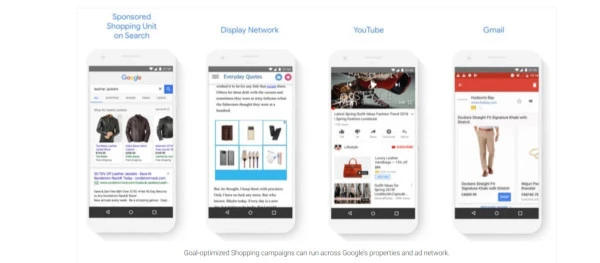
Example of dynamic remarketing
Is it worth building remarketing lists from day one?
From the very start of a campaign you can collect data on people who visit your site, add products to the cart, or watch video. That way, when you decide to launch remarketing, the ad system already has ready-made audiences. This significantly shortens the time needed to start a campaign and helps you see results faster. Even if you do not use this option at first, the collected data will be invaluable when you want to improve performance and turn interest into sales more quickly.
How to integrate digital ads with email marketing and newsletters?
Digital ads and email marketing complement each other well. Paid campaigns bring in new users and drive them to your site, while newsletters keep in touch with them and build loyalty. In practice, the traffic you gain from Google Ads or social media is worth adding straight to your mailing list, so you can communicate with the customer without extra advertising costs.
Email marketing also supports remarketing. A user who clicks an ad and subscribes to your newsletter can later receive personalized messages, for example about an abandoned cart, promotions, or new products. This way your digital and email efforts reinforce each other and increase the chance of a sale.
Which digital marketing activities and tactics are most effective?
Online advertising is not only about choosing an ad system, but also about how you run the campaign. Even the best-matched platform will not deliver without the right strategy, budget planning, and ad formats. Get to know the key digital marketing tactics that help you see results faster and make better use of your chosen channels.
Which channels deliver the fastest return on investment?
Not every ad channel works at the same pace. Some activity is built for long-term results, while other channels can produce first results almost immediately. When choosing channels to start with, it helps to know which offer the fastest return on investment. The most predictable and fastest return comes from search advertising. Social media and video, in turn, are an excellent complement that strengthens brand awareness and builds extra touchpoints with the customer. You will get the best results when these channels are connected and form a coherent sales funnel.
How to start a campaign: with purchase intent or with building awareness?
When planning your first online advertising, the question of where to start often comes up. Is it better to focus right away on people ready to buy, or to build brand recognition first? Search ads and product campaigns let you reach users who are already looking for specific solutions. This is the shortest path to a sale and usually the best choice for companies that want to test advertising quickly and get their first conversions.
Awareness campaigns (for example on YouTube, TikTok, or Instagram) do not always bring quick transactions, but they play an important role in a long-term strategy. They let you reach a broad audience, spark interest in your brand, and prepare people for the next stages of the sales funnel.
Intent-based campaigns deliver fast results, but only combining them with brand-building creates a complete marketing strategy. That way your company not only sells here and now, but also builds a foundation for future growth.
Which ad formats to create: short video, carousels, UGC?
The success of an online campaign depends not only on the platform you choose, but also on the ad format. Each one engages the audience differently and works at a different stage of the sales funnel.
- Short video – short videos have taken over social media. TikTok, Instagram Reels, and YouTube Shorts show that dynamic clips a dozen or so seconds long can effectively grab attention and grow reach. They work great in brand campaigns and at the start of the customer journey.
- Carousels – carousel ads let you present several products or services in one format. It is a good way to engage users and guide them step by step through your offer. Carousels work in both sales and remarketing campaigns, because you can use them to remind customers of products they viewed earlier.
- UGC (user-generated content) – content created by users, ambassadors, or influencers enjoys a high level of trust. UGC works especially well on social media, because it looks more natural than professional ad creative. Used well, it increases brand authenticity and supports buying decisions.
When and how to add video campaigns (YouTube, TikTok) to your sales funnel?
Video campaigns are one of the most engaging ad formats, but they need the right moment to launch. It is best to add them once your company already has basic activity in search and social media. That way video does not replace your sales efforts but reinforces them.
At the top of the funnel, video ads help build brand awareness and grab the attention of new audiences. Here, short, dynamic clips on YouTube, TikTok, or Instagram Reels work well, with a simple message that presents your brand value. In the middle of the funnel, video can be used for education and storytelling, showing how products are used, customer reviews, or comparisons with competitors. At the bottom of the funnel, just before the buying decision, video ads act as a reminder and reinforce trust. Recommendations, case studies, and practical demonstrations of your offer work well here.
Treat video campaigns as support for the entire sales funnel, not just a tool for building reach. Matched to the stage of the customer journey, they can significantly boost the effectiveness of your other channels and speed up the buying decision.
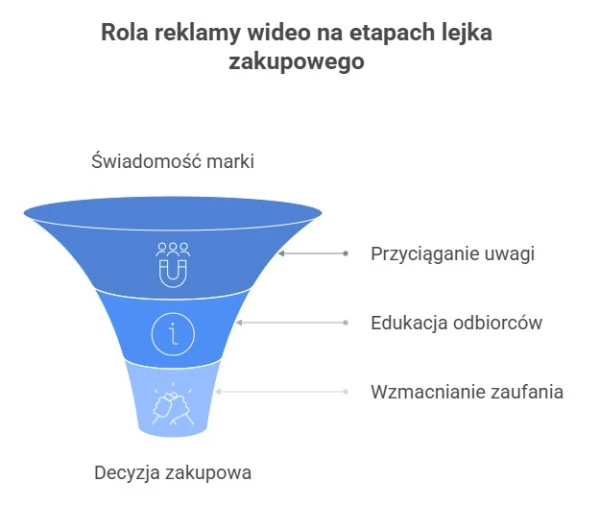
The role of video advertising at each stage of the sales funnel
How to split your advertising budget?
Splitting your ad budget is one of the hardest tasks in campaign planning. Each channel plays a different role in the buying process, so it is important to set the right proportions from the start. At first, it is worth putting the largest share of the budget into search ads, because they most often generate quick conversions and reach people with clear purchase intent.
Social media and display ads work well as support, because they build reach, engage users, and enable effective remarketing. Video ads and retail media can be added gradually. Video increases recognition and supports other channels, while marketplace ads help e-commerce scale sales faster. Adjust your budget to the results regularly, so each channel plays its proper role in the strategy.
How to set a minimum test budget for reliable performance analysis?
Testing campaigns is an inherent part of online advertising. But for the results to be meaningful, you need an adequate budget. Amounts that are too small can leave a campaign without enough clicks or impressions, and the data too thin to make sound decisions. A minimum test budget should generally allow for a few hundred clicks or tens of thousands of impressions over one or two weeks. In practice, for search campaigns it is worth starting with a modest monthly amount, and for social media and video campaigns with a somewhat larger sum that lets you test different audiences and formats.
It is also important to test more than one ad variant. That way you can compare the performance of headlines, graphics, videos, or targeting groups. The goal of a test is not only to generate sales, but also to find out which parts of the campaign work best and have the potential to scale. Start with an amount that lets you gather a solid sample, and based on the results, increase spend on the campaigns that deliver the best return.
How to measure channel performance: conversions, CPA, ROAS?
Effective online advertising should deliver measurable results. To judge whether a campaign really works, it is not enough to look at clicks or reach. Just as important, if not more so, are metrics tied to business performance, such as conversions, ROAS, and CPA.
Conversions — A conversion can be a purchase, a form submission, a file download, or another action that matters to your business. It is the basic metric that shows whether a campaign actually leads to its goal. Set conversion goals in your ad systems from the start and monitor them on an ongoing basis.
CPA (Cost Per Acquisition) — CPA is the cost of acquiring one customer or completing a specific action. This metric lets you judge how much a sale or a lead really costs and whether it is profitable compared to your margin and revenue.
ROAS (Return On Ad Spend) — ROAS shows the return on your ad spend. You calculate it by dividing the revenue a campaign generated by its cost. A result above 1 means the advertising pays for itself, and the higher the figure, the more profitable the activity.
The best way to measure performance is to track several metrics at once. Conversions show whether a campaign works, CPA answers the question of profitability, and ROAS lets you assess the return on investment. Only a complete analysis gives the full picture and lets you make sound decisions about what to do next.
Summary
Promoting a business effectively is a long-term effort that calls for a systematic approach. Experiment with different strategies, monitor your results, and adjust your activity to the needs and expectations of the market. Remember that a marketing campaign is an investment that can bring significant benefits to your company. Use the available tools and methods, be creative and consistent, and you will surely see positive results.
FAQ - Questions and answers
Effective ways to promote a business online include building a professional website, advertising with paid Google Ads campaigns, using content marketing such as blogging and creating valuable materials, being active on social media, using email marketing, and taking part in the local community. Publish engaging content regularly, such as posts, photos, and videos. Interacting with your followers also matters a lot, by replying to comments and messages and by running contests and promotions. As part of advertising on social media, you can also partner with influencers and invest in a paid Facebook Ads campaign. Start by building the basics: your own website, a Google Business Profile, and social media profiles. Then launch your first ad campaigns (for example Google Ads or Facebook Ads), measuring results and scaling gradually. Absolutely. Local campaigns (for example hair salon Chicago or restaurant Austin) are among the best converting. Google Ads, a Google Business Profile, and local SEO help you reach customers in your immediate area. If you want immediate traffic or sales, go with Google Ads campaigns (for example search, remarketing, and product campaigns) and Facebook or Instagram ads with a clear call to action.How can you promote your business online effectively?

How can you use social media to promote your business?
Where should you start advertising your business online?
Is local online advertising effective?
Where should you advertise if you want fast results?
Clutch.co is one of the most trusted review platforms in the world! We're one of the highest-rated and most frequently reviewed digital marketing agencies in Poland on the world's largest review platforms: Google and Clutch.co. See our ratings and find out why businesses choose to work with us. 



Over 750 Positive Google Reviews and 130+ Reviews on Clutch.co


